
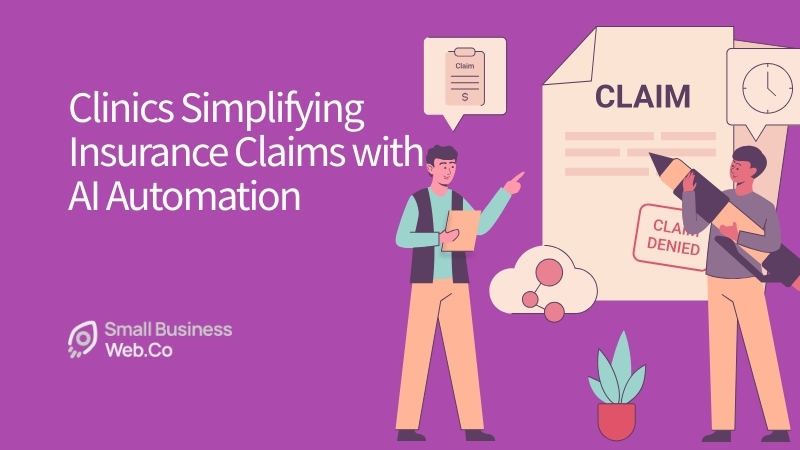
Clinics Simplifying Insurance Claims with AI Automation
Insurance claims processing in clinics has long been a source of headaches for healthcare administrators and staff. The process often involves mountains of paperwork, complex forms, and constant back-and-forth with insurers—each step prone to errors and delays. These inefficiencies don’t just slow things down; they affect clinic cash flow and drain valuable time that could be spent on patient care.
Key takeaway:
AI automation is changing the game for clinics. By replacing cumbersome manual processes with smart technology, clinics are finding new ways to simplify insurance claims, reduce administrative burdens, and improve healthcare efficiency. Automation offers streamlined workflows, fewer mistakes, and faster reimbursements—helping clinics thrive both operationally and financially.
Clinics simplifying insurance claims with AI automation aren’t just keeping up—they’re setting new standards for efficiency in healthcare. This transformation isn’t exclusive to the healthcare sector; industries like manufacturing are also leveraging digital transformation to enhance their operations. Similarly, the beauty and spa industry can benefit from adopting digital marketing tactics to boost their online presence.
The Challenges of Manual Insurance Claims Processing in Clinics
Manual billing and claims management in clinics bring a unique set of challenges that can strain staff, resources, and finances. Each insurance claim often requires meticulous data entry, document gathering, and detailed review—turning what should be a straightforward process into a time-consuming administrative maze.
Key pain points include:
- Complexity & Time Consumption: Each claim must be carefully coded and matched with the correct treatment details. Staff juggle various insurer requirements, paperwork formats, and submission portals, leading to frequent bottlenecks and long processing times.
- Frequent Claims Errors: Manual data entry is highly prone to mistakes—think incorrect patient details, mismatched codes, or missing documentation. Even minor claims errors can trigger rejections or lengthy back-and-forths with insurers.
- Delays in Reimbursement Cycles: When errors or omissions occur, reimbursement cycles stretch for weeks or months. This lag ties up cash flow and makes it challenging for clinics to forecast revenue accurately.
- Financial Impact on Clinics: Delays and denied claims directly hit a clinic’s bottom line. Staff spend extra hours resolving disputes rather than focusing on patient care or other core tasks. Unpredictable income streams can disrupt payroll, supply orders, or investment in new services.
“Manual billing isn’t just tedious—it’s risky business when every mistake chips away at your clinic’s financial health.”
The cumulative effect is clear: operational efficiency takes a hit while the clinic’s focus shifts from quality care to paperwork headaches. Clinic leaders are left searching for ways to break free from these manual pitfalls and restore balance between administration and patient care.
One potential solution lies in leveraging technology to streamline the claims process. By adopting API solutions that enhance website efficiency and reduce development costs, clinics can automate much of the manual work involved in claims processing.
Additionally, investing in professional website development packages can create secure, high-performing websites that facilitate smoother online interactions with insurers.
Moreover, the importance of brand identity cannot be overstated in this digital age. By understanding the impact of brand color choices on brand identity and business growth, clinics can better position themselves in the market.
Finally, utilizing resources like Elementor templates for their websites can significantly improve user experience and engagement. Coupled with effective content writing strategies, these measures can help clinics regain control over their administrative processes while refocusing on their primary mission: providing quality patient care.
How AI Automation Transforms Insurance Claims Management in Clinics
Modern clinics are increasingly turning to AI medical billing software as a game-changer for insurance claims management. With the rising complexity and volume of claims, automation benefits extend far beyond simple time savings—AI injects accuracy, consistency, and speed into processes that have historically been error-prone and labor-intensive.
Automated Verification and Validation of Claims Using AI Technology
One of the most significant breakthroughs in this space is the use of AI for automated claim verification and data validation. Here’s what that looks like in real-world clinic operations:
1. Data Extraction & Entry
AI medical billing software can pull relevant data from electronic health records (EHR), prescription systems, and diagnostic reports. This eliminates manual entry errors and ensures all necessary fields are populated correctly.
2. Policy Compliance Checks
Before a claim goes out the door, intelligent algorithms scan it against insurer policy rules. Any discrepancies or missing information are flagged instantly, giving staff the chance to correct errors before submission—minimizing rejections and resubmissions.
3. Code Validation
Medical coding errors are a common cause of claim denials. AI-powered solutions can analyze diagnosis (ICD) codes and procedure (CPT/HCPCS) codes, cross-referencing them with payer requirements to confirm compatibility. The result: fewer coding mistakes, less back-and-forth, and faster approvals.
“By integrating automated verification tools into our billing workflow, we’ve reduced claim denials due to clerical errors by over 60%. The software catches mistakes we’d never notice on our own.”
— Practice Manager at a Community Health Clinic
How AI Delivers Accuracy Improvement
The heart of automation benefits lies in reliable accuracy improvement. Through continuous learning from historical claim data and outcomes, AI refines its ability to:
- Recognize patterns in previously accepted or denied claims
- Identify high-risk fields (such as patient demographics or provider details) that often cause issues
- Suggest corrections or optimizations before a claim is finalized
This proactive approach means clinics spend less time fixing problems after the fact—and more time maintaining steady cash flow.
Real Examples: Clinics Simplifying Insurance Claims with AI Automation
Clinics using advanced claim verification tools report dramatic reductions in processing times:
Before AI: Manual review could take hours per batch of claims; staff often juggled multiple rounds of corrections.
With AI: Automated systems review hundreds of claims in minutes, flagging only those needing human attention.
Automating these steps doesn’t just speed things up—it also empowers smaller clinics with limited resources to achieve error reduction rates previously only seen by large hospital systems. Staff can focus on higher-value tasks while technology handles repetitive checks.
Leveraging Digital Tools for Enhanced Efficiency
In addition to AI automation, clinics can further streamline their operations by embracing digital marketing strategies. With the right digital marketing agency, clinics can enhance their online presence and attract more patients.
Moreover, utilizing data insights tools can provide valuable information that drives growth and helps make informed
Fraud Detection and Prevention with Advanced AI Algorithms in Insurance Claims Processing
AI medical billing software excels at spotting inconsistencies and anomalies in insurance claims, flagging suspicious activity much earlier than manual review. By using advanced algorithms that can identify patterns and validate data in real-time, clinics can greatly reduce the risk of fraudulent claims. This level of automation benefits both clinics and insurers by:
Automatically checking claim data against large databases to find duplicate charges, unusual billing patterns, or incorrect patient information.
Reducing errors through automated verification of claims, which eliminates incorrect codes or unauthorized procedures before they are submitted.
Improving accuracy as AI systems learn from past data, constantly improving their ability to identify new methods of fraud.
The role of AI-powered billing software goes beyond just detecting fraud—it also improves accuracy and helps streamline financial operations for clinics. When less time is spent investigating errors or denied claims, payment cycles become faster and cash flow improves. Clinics that use AI automation to simplify insurance claims can trust these systems for both error-free processing and strong prevention of fraudulent claims.
Real-Time Patient Eligibility Checks Through Automation for Streamlined Insurance Claims Management in Clinics
AI medical billing software now enables clinics to perform instant patient eligibility verification—even before a single treatment is delivered or a bill is generated. This real-time check automatically cross-references patient data with insurer databases, ensuring up-to-the-minute accuracy. With automation benefits like data validation and claim verification, clinics cut down on the manual back-and-forth that frequently leads to errors and costly delays.
Benefits of Automated Patient Eligibility Verification
- Error reduction: Automated eligibility checks minimize human mistakes that can trigger claim denials.
- Accuracy improvement: Data validation steps confirm patient coverage details, catching discrepancies immediately.
- Faster cash flow: Immediate confirmation of insurance status helps clinics submit claims correctly the first time, resulting in quicker approvals and payment cycles.
- Reduced administrative burden: Staff spend less time on phone calls and paperwork, freeing up resources for patient care.
AI-powered billing software doesn’t just speed up processes—it transforms the entire financial operation, making Clinics Simplifying Insurance Claims with AI Automation a reality.
In addition to these advantages, it’s crucial for clinics to enhance their online presence through effective organic SEO strategies. By improving their website’s visibility, they can attract more potential customers, further streamlining their operations and increasing revenue.
Operational Benefits Beyond Insurance Claims Processing with AI Automation in Clinics
AI-powered administrative automation extends its reach well beyond insurance claims, becoming an essential tool for clinics aiming to streamline a wide array of day-to-day operations. Integrating AI into core administrative workflows means staff can ditch tedious manual tasks and focus attention on high-impact activities.
Clinic Tasks Streamlined by AI
1. Appointment Scheduling
AI-driven systems handle scheduling with speed and accuracy, optimizing slots based on provider availability, patient preferences, and even predicting no-shows using historical data. This leads to fewer gaps in the schedule and happier patients who get timely appointments.
2. Staff Optimization
Advanced algorithms analyze patient flow, seasonal trends, and provider specialties to recommend optimal staffing levels. Clinics can adjust shift patterns automatically to meet real-time demand while avoiding overstaffing or burnout.
3. Inventory Control
AI solutions track medical supplies in real time, predict usage patterns, and trigger automatic reordering before stocks run low. This reduces waste, eliminates manual stock checks, and ensures essential items are always available without over-purchasing.
4. Procurement Management
Automating procurement processes allows clinics to source supplies at the best prices while minimizing paperwork. AI compares vendors, manages order cycles, and streamlines approvals—cutting costs and administrative delays.
Enhancing Compliance Reporting Through Automation for Regulatory Adherence in Clinic Operations Using AI Technology
Staying compliant with healthcare regulations is non-negotiable for clinics, but manual compliance reporting is notoriously time-consuming and prone to error. With compliance reporting automation powered by AI:
Accurate Documentation: Algorithms extract relevant data from EHRs (Electronic Health Records), billing systems, and other sources to populate regulatory forms automatically. This minimizes mistakes that could lead to audits or fines.
Timely Submissions: Automated reminders and workflows help clinics meet deadlines for submitting compliance reports to governing bodies like HIPAA or local health authorities.
Continuous Monitoring: AI monitors changing regulations and clinic processes, flagging potential compliance risks before they become issues. Real-time dashboards keep management informed of compliance status across all departments.
“Clinics simplifying insurance claims with AI automation often find the benefits ripple across every area of operation—from smoother appointment books to seamless regulatory reporting.”
The adoption of administrative automation isn’t just about efficiency—it’s about building a smarter clinic infrastructure where resources are optimized and regulatory demands are met without draining staff energy or risking costly oversights. Furthermore, the integration of blockchain technology into these automated systems can further enhance security in web development practices associated with these operations, providing an additional layer of protection for sensitive patient data while also boosting transparency and user trust.
Financial Health Improvements Driven by AI Automation in Insurance Claims Management for Clinics
AI-driven automation plays a crucial role in supporting cash flow management for clinics. By accelerating insurance approvals, clinics often see reimbursement timelines shrink from weeks to just days. This rapid turnaround reduces the period between service delivery and payment, allowing clinics to maintain steady cash reserves and cover operational expenses without unnecessary borrowing.
Key financial benefits include:
Faster Insurance Approvals: Automated claim processing leverages AI algorithms to verify data, check eligibility, and ensure compliance before submission. This minimizes administrative lags and cuts down on back-and-forth communication with insurers—leading to near-instant approvals in many cases.
Decreased Claim Denials: With AI meticulously checking submissions for common errors, missing information, or coding inaccuracies, the rate of denied claims drops significantly. Fewer denials mean fewer resubmissions and appeals, which streamlines the revenue cycle.
Improved Revenue Forecasting: Consistent cash inflows make it easier for clinic administrators to predict income trends. Reliable projections support smarter investments in staff training, facility upgrades, or new technology.
By automating traditionally manual tasks that directly impact reimbursements, clinics can devote less energy to chasing payments and more toward growth strategies. The boost in operational liquidity means better preparedness for unforeseen circumstances—whether it’s investing in new equipment or weathering industry fluctuations.
AI automation’s positive effects on cash flow management set the stage for broader organizational improvements across patient care, compliance, and efficiency. However, to fully realize these benefits, clinics must also focus on their online presence. A website audit checklist can help identify areas of improvement in their digital platforms, further enhancing operational efficiency and patient engagement.
The Impact of AI Automation on Healthcare Providers, Patient Care, and the Future of Clinic Insurance Claims Processing
AI-driven automation is transforming the daily realities of clinics, empowering healthcare teams to shift their focus back to what matters most: patient care. When repetitive administrative tasks—like insurance claims management—are streamlined through intelligent technology, providers gain valuable hours that can be reinvested in direct patient interaction.
How AI Automation Benefits Clinics
Emerging innovations promise even greater possibilities for clinics simplifying insurance claims with AI automation:
Predictive analytics: By analyzing historical claim data and current trends, AI systems can forecast reimbursement timelines or flag potential denials before they occur.
Machine learning advancements: Algorithms grow smarter over time, enabling continuous improvement in fraud detection, compliance reporting, and eligibility checks.
“With every task AI takes off our plate, we get to refocus on providing better care instead of chasing paperwork.” — Clinic Administrator
As these technologies evolve, clinics will find themselves better equipped to deliver high-quality care while maintaining a healthy financial footing—a win-win for both providers and patients.
Challenges in Implementing AI in Healthcare
However, the integration of AI in healthcare isn’t without its challenges. As clinics embrace these technological advancements, they must also prioritize cybersecurity to protect sensitive patient data from evolving cyber threats. This is particularly crucial as more patient interactions and data are handled online.
Moreover, the design and functionality of small business websites, including those of healthcare providers, must keep pace with these changes. Adopting the latest web development trends can significantly enhance user experience and data security.
In a different yet related sector such as fitness, personal trainers can also benefit from an essential resource library tailored for their needs. This library provides a wealth of knowledge that helps them stay on the cutting edge of fitness trends and strategies.
Lastly, it’s interesting to note that branding plays a crucial role in any business. For instance, spa and salon businesses can draw inspiration from a collection of spa and salon logo designs which showcases innovative concepts and trends in logo design.
Conclusion
Embracing AI automation benefits clinics by transforming tedious insurance claims processing into a seamless, efficient experience. Clinics simplifying insurance claims with AI automation gain the advantage of:
Streamlined workflows: Automation reduces manual data entry and repetitive tasks, freeing up valuable staff time.
Improved financial health: Faster approvals and fewer claim denials mean steadier cash flow and stronger revenue cycles.
Enhanced patient care: Healthcare professionals can focus more on patients, with less distraction from administrative burdens.
Future-ready operations: AI’s potential continues to grow, opening doors to predictive analytics and smarter resource management that strengthen a clinic’s competitive edge.
Exploring these innovations positions clinics at the forefront of healthcare efficiency. The landscape is shifting rapidly—those who adapt stand to benefit most from the evolving capabilities of AI in clinic management.
However, the benefits of digital transformation are not limited to the healthcare sector. For instance, small businesses across various industries such as boutique services or other services can also leverage these advancements for improved operational efficiency. With custom web solutions tailored to their specific needs, these businesses can establish a robust online presence.
Moreover, sectors like fitness are witnessing a revolution with the advent of tech wearables, which are transforming fitness studios and gyms in the USA. In addition, consultancy firms seeking to enhance their online visibility can find inspiration from professional website designs provided by companies specializing in digital solutions.


About the Author - Anusha
Anusha is a passionate designer with a keen interest in content marketing. Her expertise lies in branding, logo designing, and building websites with effective UI and UX that solve customer problems. With a deep understanding of design principles and a knack for creative problem-solving, Anusha has helped numerous clients achieve their business goals through design. Apart from her design work, Anusha has also loved solving complex issues in data with Excel. Outside of work, Anusha is a mom to a teenager and also loves music and classic films, and enjoys exploring different genres and eras of both.

